Partial Knee Replacement
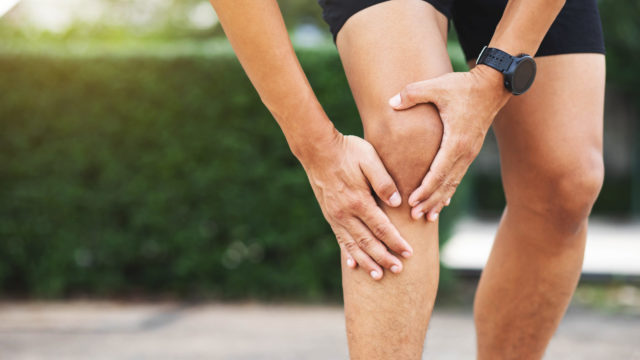
A knee has three compartments; one where the knee cap [patella] moves back and forth on the thigh bone [femur] and two weight bearing compartments where the femur moves upon the tibia separated by the two cruciate ligaments in the middle. Where these surfaces meet and move one on the other [articulate] the bone is covered with a thin [about 1/8th inch] layer of articular cartilage that is very smooth and slick. If this layer is disrupted for any reason and is no longer a low friction surface, the joint [arthro] becomes inflamed [itis] and the knee’s owner has arthritis. The cartilage destruction can be for different reasons; rheumatoid, gout, septic [infected], post-traumatic. Thus, one hears of rheumatoid arthritis, gouty arthritis, etc. The most common arthritis is the result of the progressive degeneration of the articular cartilage leading towards bone rubbing on bone and the associated deformity stiffness and pain seen with degenerative arthritis.
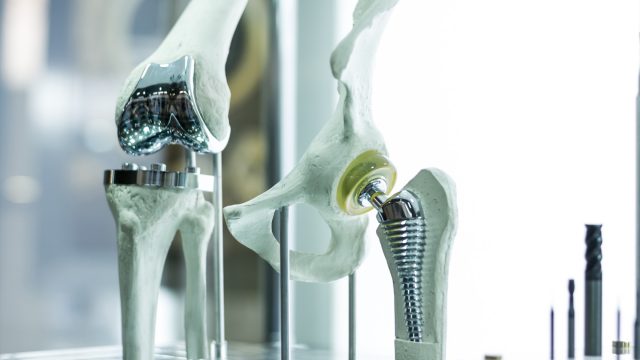
When three compartments are involved and surgery is considered, all cartilage surfaces are compromised. Thus, the cartilage is totally replaced in all three compartments with prosthetic devices that mimic the shape and function of the lost cartilage, a total knee. It would better be called and considered a TOTAL CARTILAGE of the knee replacement. Very little bone is removed with these artificial surfaces. The problem being corrected generally does not involve the bones, the ligaments, tendons or other structures that make up the totality of a knee. It is the cartilage that is damaged.
For many years, and still to a large extent, if one compartment was damaged, then all three were replaced. This typically made for an improved knee, but at the cost of a large operation that replaced much of a knee that was normal and the sacrifice of cruciate ligament function. The cruciates are essential to normal knee function. That ACL [anterior cruciate ligament] that injured athletes tear and have repaired is lost with a total knee.
A partial knee is like a total in that it uses the same materials to similar ends, the resurfacing of the bone where the cartilage is damaged or gone. But the resurfaced area is not all three compartments, just one or two. And by replacing less, the incision can be smaller to the skin and underlying muscle, the ACL is retained, the recovery is quicker and the end result replicates closer the normal knee.
A “uni” is a single compartment replacement and a “bi”, two. Many patients who have traditionally undergone total knees are candidates for this attractive alternative. Some people ask, “If I’m going to have surgery, why not just replace it all? Isn’t the rest of the knee going to wear out anyway?”
Maybe, but not necessarily. Many studies show a large majority of uni knees to be functioning well at 15 or more years and with the improved designs, materials and surgical techniques now available, the durability and long term results are expected to improve further. In an effort to “first, do no harm,” it is reasonable to say “if it ain’t broke, don’t fix it.”
A partial knee replaces that portion of the knee’s cartilage that is damaged, leaving the healthy areas intact.
Dr. Napoli will present a seminar on Carpal Tunnel Syndrome at the Pardee Health...
Dr. Napoli will present a seminar on osteoarthritis of the hand and wrist on Tuesday, March 20 at...
Dr. David Napoli, a board-certified orthopedic surgeon and specialist in hand and upper...
We value your feedback:
Patient Satisfaction Survey »“My neck surgery was a complete success. I would recommend Dr Hicks to anyone.”
We so appreciate your personal interest as well as your professional excellence.
I have nothing but the highest praise. You've got quite a team there.
The surgery you performed has given me a new freedom of mobility along with the opportunity to enjoy the many life pleasures I had been denied.
It was the best decision I've made. Dr. Eddings took really good care of me.
My entire experience with the Blue Ridge staff was wonderful
I was afraid to get another carpal tunnel release done. Dr. (Angelo) Cammarata, who is a very kind, professional and gentle physician, changed that.
Dr. Groh ... gave me back my quality of life after completing the reverse shoulder procedure on me
I cannot speak highly enough about their professionalism and personal attention to my progress.
Dr. Groh gave me my life back. I have a smile on my face.
I'm back in the woodshop and plan to play golf this spring. I had zero pain. I'm absolutely thrilled.
Dr. Smith did a real good job on my knee. I had real good service.
I made the right choice to go with Dr. Hedrick. He was very professional. I felt very well informed.
The modern technology and Dr. Edding's surgical skills have given me a new lease on life.
I find Dr. Eddings to be extremely intelligent and also tremendously communicative.
I've had excellent care. Dr. Saenger did a good job on my knee. The follow up care has been very good.